
Quick answer: The Dubai rental index (the DLD Smart Rental Index) decides how much your landlord can raise your rent when you renew. If your rent is no more than 10% below the average for similar homes in your building or area, no increase is allowed. The maximum is 20%, and only if your rent is more than 40% below average. Your landlord must give you 90 days’ written notice before the contract ends. Check your own number on the DLD website or the Dubai REST app, or estimate it with our RERA rent increase calculator.
Dubai rent increase rules in 2026 (the RERA table)
The caps come from Dubai Decree No. 43 of 2013. They have not changed for 2026. What changed in January 2025 is how the “average rent” is worked out: the Dubai Land Department (DLD) replaced the old area-wide RERA index with the Smart Rental Index, which also rates each building.
| Your rent is below the index average by | Maximum increase at renewal |
|---|---|
| Up to 10% (or your rent is at or above average) | 0%, no increase |
| 11% to 20% | 5% |
| 21% to 30% | 10% |
| 31% to 40% | 15% |
| More than 40% | 20% |
Two rules apply on top of the table:
- Only at renewal. Rent cannot go up in the middle of a contract.
- 90 days’ notice. The landlord must tell you in writing at least 90 days before the contract ends if they want to change the rent or any other term. Without that notice, the contract renews on the same terms.
How to calculate your rent increase: worked examples
The gap is: (index average minus your rent) divided by the index average. Here are five examples with an index average of AED 110,000 a year:
| Your current rent | Below average by | Max increase | Max new rent |
|---|---|---|---|
| AED 100,000 | 9.1% | 0% | AED 100,000 |
| AED 90,000 | 18.2% | 5% | AED 94,500 |
| AED 80,000 | 27.3% | 10% | AED 88,000 |
| AED 70,000 | 36.4% | 15% | AED 80,500 |
| AED 60,000 | 45.5% | 20% | AED 72,000 |
Even at the 20% cap, the new rent can stay well below the average. The rules limit how fast rent can catch up with the market; they do not lift you to the market rate in one step. To try your own numbers, use the Viewit rent increase calculator.
How to check the Dubai Smart Rental Index
The official result comes only from the DLD. There are two ways to get it:
- DLD website: go to dubailand.gov.ae and open the Rental Index service.
- Dubai REST app: open the Rental Index in the app (iOS and Android).
- Enter the details from your tenancy contract or Ejari: area, building name, property type, number of bedrooms, current annual rent and contract end date.
- The result shows the average rent for similar units and the increase allowed for your contract. If your building is not eligible for an increase, the index shows “not applicable”.
- Save a screenshot or PDF of the result. You will need it if you reply to your landlord or go to the Rental Disputes Center.
Have your Ejari to hand. The details on it are what the index matches your home against.
What the building rating changes
The old index compared your rent with the average for the whole area. The Smart Rental Index compares it with similar units in buildings of a similar standard. According to reporting by Khaleej Times (January 2026), the DLD classifies buildings on:
- technical and structural condition;
- finishes and maintenance;
- location;
- services such as cleaning and parking management.
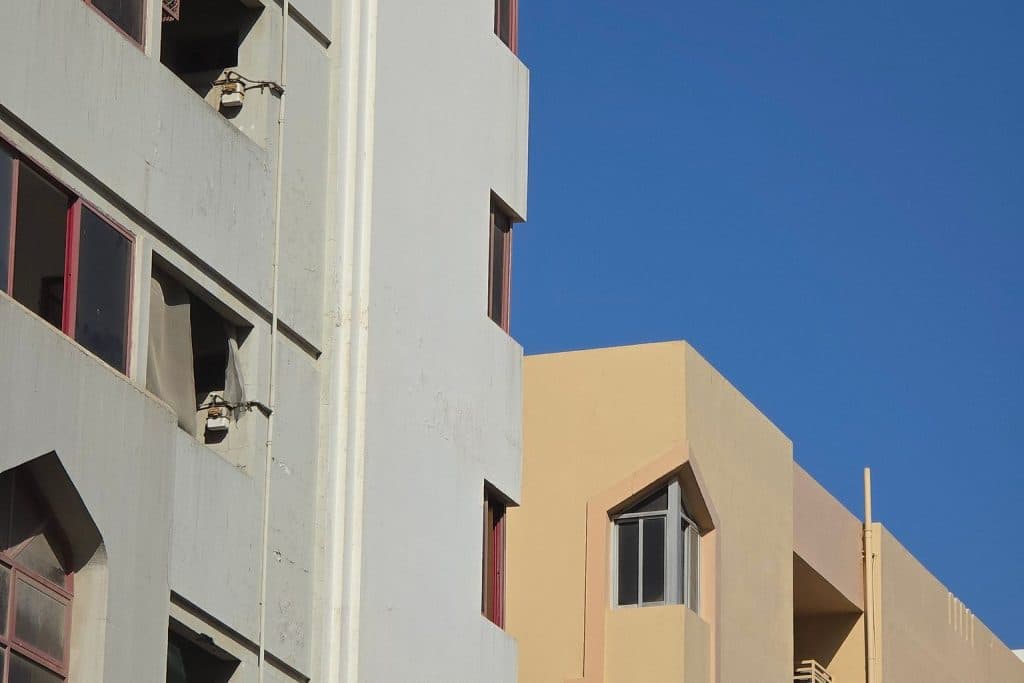
What this means for you: a tenant in an older, poorly kept tower is no longer compared with the newest tower in the same area. This often lowers the average, which lowers the increase allowed. In one case Khaleej Times reported, a renewal from AED 56,700 to AED 63,000 was dropped after the index showed “not applicable”. An agent quoted in the same report said a Dubai Marina renewal came down from about AED 225,000 to AED 205,000 once the index was applied.
The DLD has not published the full scoring method. If you think your building’s rating is wrong, raise it with the DLD. You cannot change it by negotiating with your landlord.
Rents in 2026: renewals are going up, new rents are coming down
The index matters more this year because the market is split. DXBinteract data for 2026 shows average rents on new contracts down 2.3% for apartments and 11.1% for villas year on year. Renewal rents rose 3.4% for apartments and 10.3% for villas. Asking rents on Property Finder fell in nine of ten popular apartment areas between Q3 2025 and Q3 2026:
| Area | Median asking rent, Q3 2026 | Change in a year |
|---|---|---|
| Downtown Dubai | AED 180,000 | -21.7% |
| Dubai Marina | AED 130,000 | -16.1% |
| Business Bay | AED 105,000 | -12.5% |
| Dubai Hills Estate | AED 130,000 | 0% |
So a landlord may ask for an increase that the index allows, while similar homes nearby are listed for less. Before you agree, compare live listings. For example, see apartments for rent in JLT, apartments for rent in JBR or all rentals in Dubai. Our guide Dubai rents are falling in 2026: renew or move? covers that decision in detail.
What to do if your landlord asks for too much
- Check the dates. Was the notice in writing, and did it arrive at least 90 days before your contract ends? If not, the rent should stay the same for the next year.
- Check the index and save the result.
- Reply in writing (email is fine). Quote the index result and the increase you accept, if any.
- Negotiate. In a soft market you can often get less than the maximum. Use current listings as evidence. See our rent renegotiation guide.
- If you cannot agree, file a case with the Rental Disputes Center (RDC). The filing fee is commonly around 3.5% of the annual rent, with a minimum and maximum. Keep paying rent at the current rate while the case runs.
Your landlord cannot evict you for refusing an increase above the cap. Eviction in Dubai needs specific grounds and, in most cases, 12 months’ notice by notary or registered mail. See our eviction notice guide.
For landlords: how to raise rent the right way
- Check the index first. Asking for more than it allows usually means a dispute you will lose.
- Send written notice at least 90 days before the contract ends.
- In 2026, compare the cost of a vacant month with the increase. With new-contract rents falling in many areas, a fair renewal can earn more than an empty unit.
- Read a landlord’s rights in Dubai before you serve any notice.
Abu Dhabi and the rest of the UAE
The Dubai rental index and Decree 43 apply only in Dubai. Abu Dhabi froze rent increases on renewal at 0% from 2 June 2026, until further notice. The exception is the ADGM free zone on Al Maryah Island. Check the Abu Dhabi Real Estate Centre for the latest position. Sharjah, Ajman and the other emirates have their own rules.
FAQ
How much can a landlord increase rent in Dubai in 2026?
Between 0% and 20% at renewal. The amount depends on how far your rent is below the DLD Smart Rental Index average for similar units. If your rent is no more than 10% below average, no increase is allowed.
Is the RERA rental index the same as the Smart Rental Index?
Yes. People still call it the RERA calculator. Since January 2025, the DLD’s Smart Rental Index has replaced the old version and adds a rating for each building.
Where do I find the Dubai rental index calculator?
On the DLD website (dubailand.gov.ae) and in the Dubai REST app. For a quick estimate, use the Viewit rent increase calculator with the average from the index.
Can my landlord increase the rent without 90 days’ notice?
No. Without written notice at least 90 days before the contract ends, the contract renews on the same terms, including the rent.
What does “not applicable” mean on the rental index?
It means no increase is allowed for your unit at this renewal, usually because your rent is already close to or above the average for similar units.
Can rent go down at renewal?
The index does not force a reduction, but you can negotiate one. With asking rents down in areas like Downtown, Dubai Marina and Business Bay, many tenants are getting the same rent or less. Compare current listings before you sign.
This guide is general information, not legal advice. Rules and fees can change, so check the DLD or the Rental Disputes Center for your case. Last checked: 9 November 2026.